|
|

|
|
« Return to Birds of Wimberley |
|
FEATURED
PROPERTY
BUILDING
Architects,
Design
Homebuilders
Construction
Manufactured
Homes
BUYING
Agents
& Brokers
Developments
Inspection
Services
Mortgage &
Title
Property Insurance
Surveying
Services
EXTERIOR
SERVICES
Concrete
Decks, Gazebos
Driveways, Roads
Fences,
Gates
Landscaping, Trees
Pools,
Fountains
Roofing
Stonework,
Masonry
INTERIOR
SERVICES
Finish
Work
Floors
Furnishings
& Decor
Interior
Design
Painting,
Drywall
Tile
& Tilework
MORE
SERVICES
Cleaning,
Disposal
Equipment,
Rental
Moving,
Storage
Pest
Control
Repairs,
Maintenance
Security Services
Supplies and Materials
UTILITIES
AC,
Heating
Communications
Electrical,
Gas, Solar
Plumbing
Rainwater
Collection
Water, Wells & Septic
GET ON THE GUIDE
|
|
| Painted Buntings (Passerina ciris) 2 - Privacy is Important, Finding Buntings in Wimberley
BY PATSY GLENN
Painted buntings are quite private little birds, but there are ways to encourage them to nest in your yard by providing the right environment.
Painted Buntings are quite private little birds. No one is sure who builds the two-inch cup nest of woven grasses and plant stems. Mama is responsible for setting on the three to four speckled eggs and feeding the fledglings. Once hatched, the hungry chicks are born immobile, downless and with their eyes closed. She feeds them mostly insects.

| Photograph © Frederick J. Sgrosso
|
|
Matters become complicated when a brown cowbird leaves a large egg with a big chick in her nest. He will eat so much that some of the bunting's own babies may perish. One of our Wimberley birders saw just such a "mixed" family of seed-seeking fledglings in her own yard.
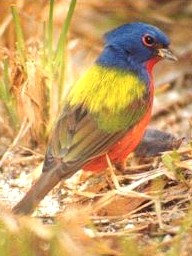
| Photograph © Frederick J. Sgrosso
|
|
Our Wimberley Painted Buntings. . .
arrive in April. In October they depart for Mexico and Central America. Most of the reasons why they are on the Audubon "Watch List" are related to the great loss of habitat in their wintering grounds and the fact that many are captured and sold as caged birds. Supporting education about the needs of these beautiful birds may help prevent habitat loss both here and in the South.
To see a Painted Bunting in Wimberley. . .
try birding in Hugo Road off RR 12. Or ask a friend if you can sit a spell near their feeder and await the spectacular arrival of the most colorful bird in the United States.
« Click here for Painted Buntings, Part One
We are grateful for the wonderful photographs generously provided by Greg Lasley, Fred Sgrosso, and Deanna Dawson.
|
|
|
|
|


 Email this
 Discuss
this
Discuss
this


